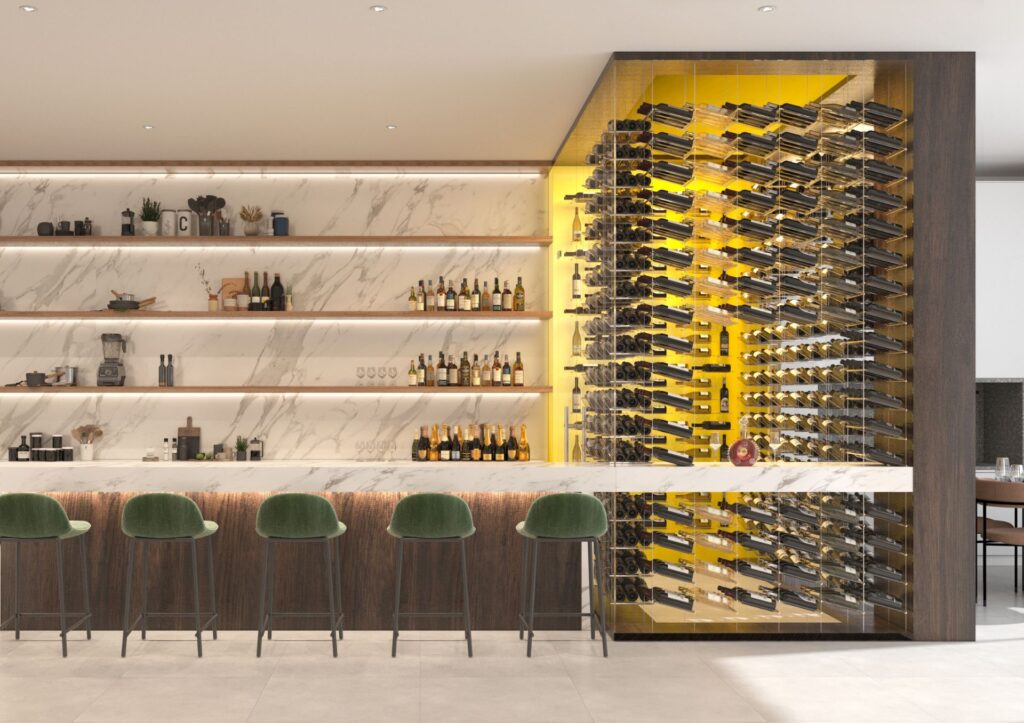
Every collection tells the designer where the room should begin
A wine cellar rarely starts with racks. It starts with the bottles already gathered and the ones still waiting to be discovered. Some collections grow through careful investment, while others form around family dinners, travel memories, and favorite regions. That personal mix should guide the room before anyone selects wood, metal, Glass, or lighting. We created this guide for collectors who want storage that fits their habits, rather than copying a showroom. A more thoughtful project becomes possible through a custom wine cellar design service centered on bottle capacity, room dimensions, display goals, and future growth. The process should turn practical needs into a space that feels naturally connected to the home.
This guide covers collection reviews, room planning, storage zones, materials, access, and long-term flexibility. We will explain why the current bottle count is only one part of the design. Large formats, cases, spirits, serving tools, and display bottles may each require different storage. The room must also support comfortable movement and the simple selection of bottles. A strong plan balances capacity with enough open space to prevent visual clutter. By understanding how the cellar will be used, homeowners can create a room that protects their wine while making the collection easier to enjoy.
What should collectors prepare before the first design meeting
Begin with a clear record of the collection. Count standard bottles, Champagne bottles, magnums, cases, and spirits separately. Note which wines are opened often and which ones may remain stored for years. Measure the proposed room and mark doors, windows, vents, outlets, columns, and ceiling changes. Take photographs from several angles. These details help the designer understand both the space and its limits.
Prepare these useful items
- Current bottle count by size and type
- Expected collection growth over several years
- Accurate room measurements and photographs
- Preferred display styles and material ideas
- Budget range and desired project schedule
Share practical concerns as openly as design preferences. Mention narrow entryways, uneven walls, existing cooling equipment, or nearby living areas. Explain whether the cellar will be private or used during gatherings. Good information enables the first plan to solve real problems rather than offer attractive guesses.
How can storage zones improve access without wasting space
A cellar should make bottle selection feel easy. Daily wines belong within comfortable reach, while long-term bottles can remain in quieter areas. Case storage may sit below display rows. Large formats need spaces that do not force them into standard openings. Glassware and serving tools may also need their own section. Clear zones prevent the room from becoming a wall of unrelated bottles.
Useful storage zones may include
- Label-forward displays for special bottles
- Dense storage for everyday wines
- Openings for magnums and wider formats
- Lower sections for full or partial cases
- Shelves for spirits and serving accessories
Avoid placing every bottle at the same angle simply for visual consistency. Mixed storage can increase capacity and make important wines easier to find. Leave room for new purchases so the design continues working as the collection changes. A cellar feels organized when every section has a purpose.
Why should room conditions influence every design decision
Wine storage depends on more than rack style. Temperature changes, humidity, light, insulation, and airflow can affect how the room performs. Glass walls may create a beautiful view but can change the cooling load. Exterior walls may also respond more strongly to seasonal conditions. The design team should review these factors before finalizing materials or equipment. Planning them early reduces the chance of costly revisions.
- Review the full enclosure
Walls, ceilings, doors, and glass joints should work together. Gaps can make stable conditions harder to maintain. Proper room preparation supports the rest of the design.
- Coordinate the cooling plan
Cooling needs depend on room size, insulation, Glass, lighting, and nearby temperatures. Equipment should be selected for the actual space. It also needs access for future service.
- Control light and heat
Lighting should reveal labels without adding unnecessary warmth. Direct sunlight should be limited. Soft, low-heat fixtures often create a more comfortable display.
- Plan for quiet operation
Mechanical equipment should not disturb nearby rooms. Venting and equipment placement deserve early attention. A cellar should feel calm when entered and when viewed from outside.
What materials make the cellar feel connected to the home
Material choices should relate to nearby rooms without copying every surface. Wood can add warmth and traditional character. Metal creates lighter lines and may suit open displays. Glass can keep the collection visible while defining the cellar as a separate space. Stone or durable counters may support serving and decanting. A limited palette usually feels more refined than a set of competing finishes.
Consider these visual choices
- Wood tones that relate to flooring or cabinets
- Metal finishes that complement nearby hardware
- Glass framing with clean and simple proportions
- Lighting that reveals texture without glare
- Open space around key display sections
View physical samples inside the actual room when possible. Daylight and evening lighting can change how finishes appear. The best materials should support the wine rather than overpower it. A calm background allows bottles, labels, and the collection’s history to remain the main feature.
Give the collection a room shaped by its own character
A custom cellar succeeds when storage, access, climate needs, and interior style work as one plan. We should begin with accurate bottle details, honest room measurements, and a clear view of future growth. Thoughtful zones make the collection easier to use, while suitable materials help the cellar belong in the home. Review each design from the perspective of selecting, opening, and returning a bottle. Then leave enough flexibility for tastes to change over time. Begin with the stories already held inside your collection, and let the finished cellar give those bottles a setting that feels entirely their own.

